
Guide
Adding a Teen Driver to Your Car Insurance
When you must add a teen, how permits are handled, how insurers assign teens to vehicles, named-driver exclusions, and the questions to ask your insurer.

By Laura Jensen · Editor
Published · Updated
Answer in brief
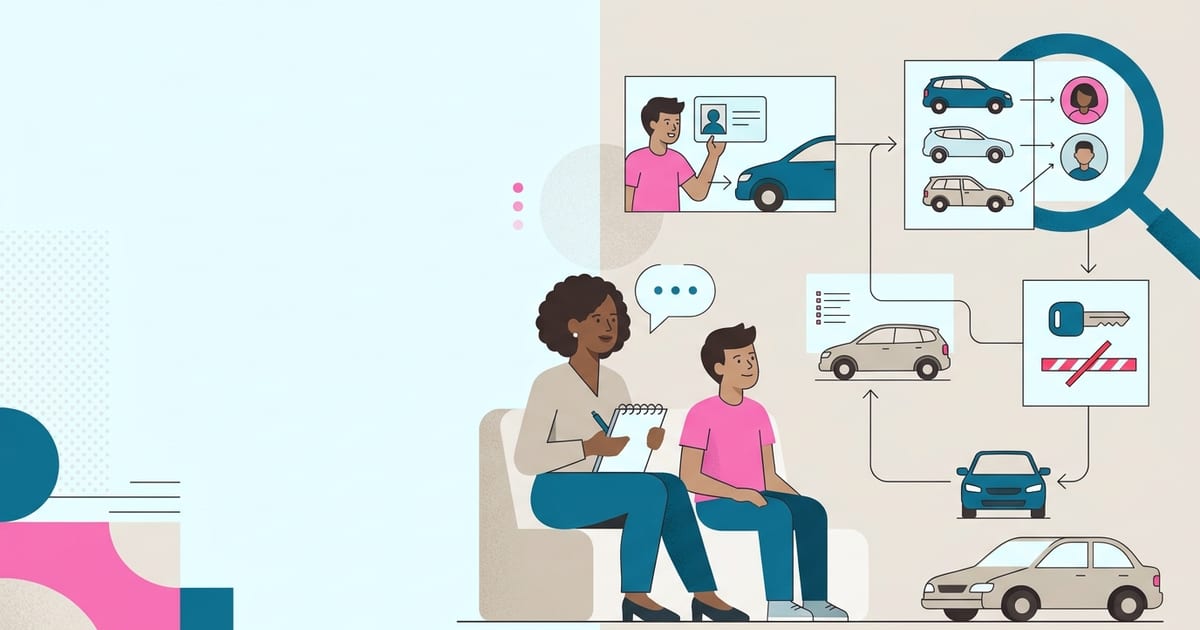
Most insurers cover a teen with a learner's permit automatically at no extra charge, and require you to add them when they are fully licensed—usually immediately, sometimes within a short window. Once added, the insurer assigns the teen to a vehicle (typically the one they drive most) and rates that car accordingly. If a teen truly will not drive the family cars, a named-driver exclusion removes them from rating, but it means no coverage if they ever do. Failing to add a licensed teen living at home is misrepresentation and can void a claim.
Permit stage
Most insurers cover permit holders in the household automatically while they drive supervised. Call anyway: a few want permit holders listed, and the call lets you ask what the teen will add to the premium once licensed and how the insurer assigns drivers to cars.
Licensed
Add the teen the day they are licensed. Any licensed driver living in the household must be listed or formally excluded. The cost of a few extra days of premium is trivial compared with a denied claim for an undisclosed driver.
Vehicle assignment
Insurers rate each driver on a vehicle. Most assign the teen to the car they drive most; some assign the highest-rated driver to the highest-rated car. Assigning the teen as the principal operator of an older, safer, lower-value sedan—and actually having them drive it—is the single biggest cost lever within a family policy.
Exclusions
A named-driver exclusion removes a household member from the policy's rating and coverage. It is appropriate for a teen who genuinely has no access to the family cars—for example, one away at boarding school without a car. If an excluded teen drives the car and crashes, there is no coverage at all.
Quote finder
Find auto insurance quotes that fit your situation
Questions for the insurer
- Are permit holders covered automatically?
- What is the deadline to add the teen once licensed?
- How do you assign drivers to vehicles?
- Which discounts apply—good student, driver training, telematics?
- Is accident forgiveness available before the first incident?
Entries in this guide
Specific questions answered in more depth.
Entry
How Insurers Assign a Teen to a Vehicle
The rating methods insurers use to decide which car a teen is priced on, and how to use them to lower the family premium legitimately.
Entry
Separate Car Insurance Policy for Teens vs. Adding to a Family Plan
Compare the costs, legal rules, and coverage risks of getting a separate car insurance policy for your teen driver versus keeping them on a family policy.
Questions & answers
Do I have to add my teen with a learner's permit?
Usually not—most insurers cover permit holders automatically—but confirm with yours.
What if my teen doesn't drive our cars?
You can request a named-driver exclusion, but the teen then has no coverage if they ever drive the cars.
Will the teen raise rates on every car?
Typically the teen is rated on one vehicle, though methods vary by insurer.
Terms used in this guide
- Permissive use
- Coverage for an unlisted driver using your car with permission. Does not extend to household members who drive regularly—they must be listed.
- Named-driver exclusion
- A policy endorsement removing a specific household member from rating and from coverage. No coverage applies if the excluded person drives.
- Principal operator
- The driver an insurer assigns to a vehicle for rating—usually the one who drives it most.
- Household member
- A person living at the insured address. Licensed household members must be listed on or excluded from the policy.
Sources and references
Legal figures on this page (minimum limits, filing periods, statutory benefits) are checked against the primary law or the state insurance regulator listed below. Links and figures last verified Nov 2026.
- Teenagers — Insurance Institute for Highway SafetyIndependent researchTeen crash risk, graduated driver licensing research and vehicle recommendations for young drivers.
- Graduated licensing laws by state — Insurance Institute for Highway SafetyIndependent researchState-by-state learner, intermediate and full-licence ages, night-driving and passenger restrictions.
- Facts + Statistics: Teen drivers — Insurance Information InstituteStatistical dataCrash and fatality statistics for drivers 16–19 and graduated licensing context.
- Fatality facts: Teenagers — Insurance Institute for Highway Safety (2024)Statistical dataFatal crash rate per mile driven for 16–19-year-olds is just over 3 times the rate for drivers 20 and older (2022 travel data); all-severity crash rate is over 4 times; risk is highest at 16–17.
- Drivers in fatal motor vehicle crashes by age, 2023 — Insurance Information Institute (2025)Statistical dataFatal-crash involvement per 100,000 licensed drivers: 42.40 (16–20), 35.34 (21–24), 28.97 (25–34), 24.18 (35–44), 21.70 (45–54), 19.45 (55–64), 15.44 (65–74), 16.63 (75+).
- Insurance losses by make and model — Highway Loss Data InstituteStatistical dataRelative claim frequency and severity by vehicle under collision, property damage, comprehensive, PIP, MedPay and bodily injury coverages.
- Consumer insurance information — National Association of Insurance CommissionersConsumer guidancePlain-language guides from the body of state insurance regulators; links to every state's insurance department and complaint process.
- Auto insurance for teen drivers — Insurance Information InstituteConsumer guidanceAdding a teen to a parent's policy versus a separate policy; good-student and driver-training discounts; vehicle choice.
Practical guidance on this page is original editorial work. Cited sources support factual statements and do not endorse this site. Dollar ranges described as typical or illustrative are editorial estimates, not figures from these sources.
Guide
How Much It Costs to Insure a Teen Driver
What adding a 16- or 17-year-old does to a family premium, what a teen pays alone, why teens are the most expensive drivers to insure, and how the cost falls.
Guide
What Coverage a Teen Driver Needs
Liability limits, uninsured motorist, collision and comprehensive, deductibles and umbrella coverage for a family with a teen driver.
Guide
Graduated Licensing and Teen Car Insurance
How graduated driver licensing stages—permit, intermediate, full—interact with insurance: when coverage is needed, how restrictions reduce risk, and what violations do.